

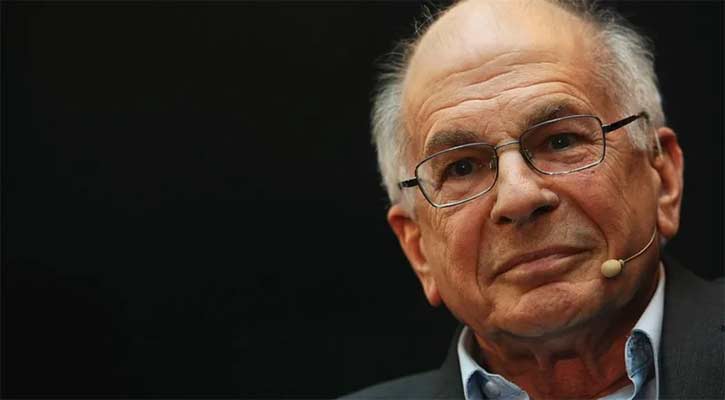
The world has lost a pioneering thinker and researcher in the field of decision making. Daniel Kahneman, who won a Nobel Prize in economics for his groundbreaking work, passed away at the age of 90. Alongside his longtime collaborator Amos Tversky, Kahneman challenged the traditional assumptions of rational decision making and shed light on the impact of cognitive biases. His legacy will continue to inspire and shape the field of science.
Daniel Kahneman: A Pioneer in Decision-Making Research
Introduction The world has lost a groundbreaking thinker and researcher in the field of decision-making: Daniel Kahneman. Known for his pioneering work that challenged traditional assumptions about rational decision-making, Kahneman's legacy will continue to shape the field of behavioral economics.
Background Daniel Kahneman was born in Tel Aviv, Israel, in 1934. He earned a degree in psychology from the Hebrew University of Jerusalem and later received a PhD in psychology from the University of California, Berkeley. His groundbreaking collaboration with Amos Tversky, a cognitive psychologist, began in the 1970s.
Research and Contributions Together, Kahneman and Tversky developed Prospect Theory, which provides a framework for understanding how individuals make decisions under uncertainty. They found that people often deviate from rational economic models, influenced by cognitive biases and heuristics. Their work had a profound impact on fields such as economics, psychology, and public policy.
Nobel Prize and Legacy In 2002, Kahneman was awarded the Nobel Prize in Economics for his work on integrating insights from psychology into economic theory. His research has influenced countless scholars and policymakers, shedding light on the challenges and complexities of human decision-making.
Top 5 FAQs and Answers
Q1: What is Prospect Theory? A1: Prospect Theory is a behavioral economic model that describes how individuals evaluate gains and losses from a reference point, leading to deviations from rational economic behavior.
Q2: What are cognitive biases? A2: Cognitive biases are systematic errors in thinking that can influence decision-making. These biases can lead individuals to rely on heuristics and make suboptimal choices.
Q3: How did Kahneman's work contribute to public policy? A3: Kahneman's research has informed policy decisions in areas such as retirement savings and medical treatments. It has helped policymakers understand the cognitive biases that can lead to suboptimal outcomes.
Q4: What is the impact of Kahneman's passing on the field of decision-making? A4: Kahneman's passing is a significant loss for the field of decision-making. His groundbreaking work will continue to inspire and guide researchers, policymakers, and practitioners.
Q5: What is the future of behavioral economics? A5: Behavioral economics is a growing field that continues to explore the complex interplay of psychology and economics. Researchers are delving into areas such as nudging, social preferences, and the role of emotions in decision-making.
Conclusion Daniel Kahneman's pioneering work revolutionized our understanding of decision-making. Through his groundbreaking research, he challenged traditional assumptions and illuminated the role of cognitive biases in shaping human behavior. His legacy will undoubtedly continue to shape future research and policy decisions, leaving a lasting impact on the field of behavioral economics.

Indian Prime Minister Narendra Modi virtually inaugurated Skyroot Aerospace's new Infinity Campus in Hyderabad and unveiled their first orbital launch vehicle, the Vikram-I. During the event, PM Modi praised India's advancements in space technology and spoke about the importance of private companies like Skyroot in driving innovation in the space sector. The Infinity Campus, equipped with state-of-the-art facilities, has the capacity to produce one rocket per month, marking a significant milestone in India's private space manufacturing capability. Skyroot Aerospace, founded by former ISRO engineers, has quickly become a prominent player in India's growing space industry, with the successful launch of Vikram-S, the country's first privately built sub-orbital rocket.

We all experience changes in our mood, whether it's feeling happy and content or irritated and moody. But what are the underlying factors that contribute to these changes? This article from Medindia explores the top 10 things that can affect our mood, from physical health to environmental factors. It also provides tips on how to avoid these mood-altering triggers and maintain a positive state of mind. With a focus on promoting overall well-being, Medindia's policies align with the UN's Sustainable Development Goals, making it a reliable source of information for health and wellness.

A recent report by Public Health Scotland has shown a steep increase in flu cases and hospitalizations in Scotland. The numbers have more than doubled from the previous week, with a higher intensity observed in younger age groups. Experts are warning of a long flu season and a new variant of the illness that is spreading more easily. Health Secretary Neil Gray has assured the public that there are enough doses of flu vaccine available in the country.

The observation of National Pollution Control Day on 2 December serves as a timely reminder of India's struggle with escalating pollution levels. The recent years have seen a sharp increase in toxic particles and hazardous emissions, causing severe health issues and environmental damage. The ongoing pollution emergency calls for more stringent regulations, better urban planning, and increased public engagement to mitigate the crisis.

As World AIDS Day approaches, conversations around HIV prevention in India are becoming more open and informed. In particular, there is growing interest in PrEP (pre-exposure prophylaxis), a medicine that offers strong protection against HIV when used correctly. With rising awareness and more accessible sexual-health services, doctors are seeing a steady rise in patients asking about PrEP as a proactive health choice. This signals a shift towards informed prevention and a stigma-free dialogue surrounding HIV.

ISRO has been making continuous efforts to establish contact with the Vikram lander and Pragyan rover, which were put into sleep mode earlier this month, ahead of the lunar night. However, the prolonged spell of cold weather conditions, reaching up to -150 degrees Celsius, has made it difficult for them to wake up. With the sunrise on the Moon's south polar region and their solar panels believed to be optimally charged now, ISRO is hoping to revive the lander and rover and continue with their experiments and studies. The latest update from ISRO is that the plan to reactivate them has been delayed to September 23 due to the extreme lunar weather conditions.

Monsoon season may bring romantic vibes, but it's also a nightmare for contact lens wearers. Rainwater contains bacteria and pollutants that can cause eye infections, especially when wearing contact lenses. Ophthalmologists recommend using glasses instead and practicing good hygiene to avoid irritation and infection.

India's first human spaceflight mission, Gaganyaan, is one step closer to reality as ISRO successfully tested the main parachutes for the mission's Crew Module. The test, conducted at the Babina Field Firing Range in Uttar Pradesh, is part of the qualification process for the Gaganyaan parachute system. The system, which includes 10 parachutes of different types, is designed to ensure the safe and stable descent of astronauts returning to Earth. This milestone test marks a crucial step forward for India's ambitious space exploration goals.

As World Pneumonia Day is observed on November 12, experts are drawing attention to the dangerous link between air pollution and respiratory illnesses. In India, the post-Diwali smog adds to the already high levels of pollution, increasing the risk of pneumonia, particularly among vulnerable populations. While outdoor air pollution is often blamed, experts emphasize that poor indoor air quality also plays a significant role in triggering and worsening respiratory infections. Health professionals are urging for better air quality regulations and precautions to prevent this deadly connection between pollution and pneumonia.

On November 12, 2025, the world will once again mark World Pneumonia Day, a global health observance highlighting the urgent need to combat one of the leading causes of death, especially in young children. Despite being preventable and treatable, pneumonia continues to claim millions of lives each year, but efforts such as the ‘Every Breath Counts’ coalition and the Global Action Plan for the Prevention and Control of Pneumonia and Diarrhoea are working towards reducing preventable deaths through vaccination and improved healthcare access. Let us continue to raise awareness and take action against this preventable killer.