

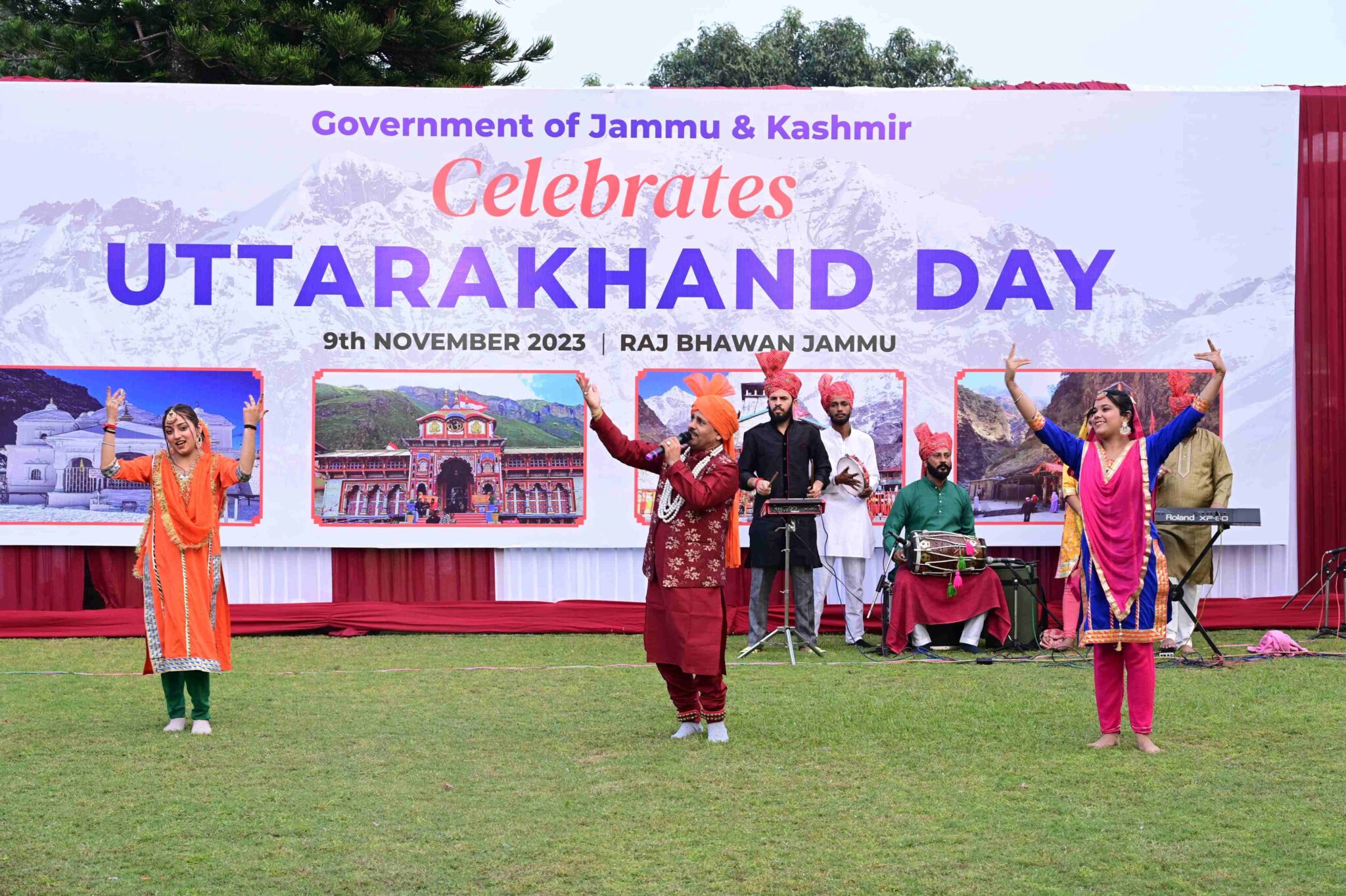
On November 9, Uttarakhand celebrates its Foundation Day as the 27th state of India, which is marked with the rich southern culture and the spiritual significance of Devbhoomi, also known as the Land of the Gods. As the state celebrates its creation, here are some significant aspects to know about Uttarakhand, including its history, climate, festivals and traditional greetings. Recently, there was also a groundbreaking decision to recognise bird watching as an industry in the state, aiming to boost tourism.
Uttarakhand Foundation Day: Celebrating the Spirit of Devbhoomi
On November 9th, Uttarakhand, nestled in the lap of the Himalayas, commemorates its Foundation Day, marking its journey as the 27th state of the Indian Union. This day is a celebration of the state's rich cultural heritage, spiritual significance, and natural beauty.
Background
Uttarakhand's history dates back to the ancient period. It was once part of the great Mauryan Empire and later witnessed the rule of the Guptas, Palas, and the Mughals. In the early 19th century, it became a part of the British Empire.
After India's independence in 1947, Uttarakhand remained a part of Uttar Pradesh. However, a long-standing movement for statehood gained momentum in the 1990s, culminating in the formation of Uttarakhand as a separate state on November 9, 2000.
Cultural Significance
Uttarakhand is known as "Devbhoomi," the Land of the Gods. It is home to numerous pilgrimage sites, including Gangotri, Yamunotri, Kedarnath, and Badrinath. The Char Dham Yatra, a spiritual journey to these four shrines, attracts millions of devotees annually.
Natural Beauty
Uttarakhand is blessed with stunning natural landscapes. The snow-capped Himalayas form its northern borders, while the fertile plains of the Ganga and Yamuna rivers flow through the state. It is also home to several national parks and wildlife sanctuaries, including the Jim Corbett National Park, famous for its tiger population.
Economic Progress
Since its formation, Uttarakhand has made significant progress in various sectors. It has a strong hydropower industry and is a destination for religious and adventure tourism. The government has recently recognized bird watching as an industry, aiming to boost tourism further.
Top 5 FAQs
1. What is the official language of Uttarakhand? Answer: Hindi.
2. Who is the current Chief Minister of Uttarakhand? Answer: Pushkar Singh Dhami.
3. What is the state animal of Uttarakhand? Answer: Musk deer.
4. Which religious festivals are celebrated in Uttarakhand? Answer: Kumbh Mela, Kanwar Yatra, Char Dham Yatra.
5. What are some traditional greetings in Uttarakhand? Answer: "Jai Bhairo," "Jai Badri Vishal," and "Jai Kedarnath."
Uttarakhand's Foundation Day is a time to celebrate the state's rich history, cultural diversity, and natural beauty. As the youngest state in India, it continues to progress while preserving its ancient traditions and spiritual legacy.

With election results just around the corner, the Union Home Minister has reiterated the BJP's respect for its alliance partners. The decision on forming a government in light of the election outcome will be based on the results and mutually agreed upon by all parties involved. Stay updated with News24 for the latest developments in the political sphere.

In a surprise move, President Donald Trump has commuted the sentence of former U.S. Representative George Santos, who was serving a seven-year prison term for fraud and identity theft. Santos, a New York Republican, admitted to deceiving donors and stealing the identities of 11 people, including family members, to fund his campaign. The decision was announced by Trump on social media, spurring strong reactions from both supporters and critics.

In a significant development, Defence Minister Rajnath Singh inaugurated Hindustan Aeronautics Limited's third production line for the LCA Tejas Mk1A and also witnessed the aircraft's successful maiden flight in Nashik. The event also marked the inauguration of HAL's second production line for the Hindustan Turbo Trainer-40 (HTT-40). With the approval of the purchase of 97 LCA Mark 1A fighter jets, the need for new inductions has been underlined by IAF chief AP Singh, while HAL officials remain confident in meeting this requirement.

In a significant development, over 200 Maoist rebels, including top leaders Rupesh and Ranita, have surrendered to Indian security forces in the Bastar region of Chhattisgarh. This marks a critical moment in the long-standing fight against Naxalism in the country. The region of Abujhmarh and North Bastar, known for its dense forests and difficult terrain, has historically served as a safe haven for Maoist groups, making it challenging for authorities to root out their presence. The massive surrender of Maoists is not only a tactical win but also a symbolic victory in the government's efforts to rid the "Red Corridor" of Naxalite influence.

Amidst his busy schedule, Congress leader Rahul Gandhi is set to make a heartfelt tribute to Zubeen Garg, the beloved singer of Assam, by attending his last rites at 'Zubeen Kshetra' in Sonapur. In anticipation of his arrival, strict security measures have been implemented in the area since morning, with a thorough inspection conducted by Gaurav Gogoi. With the deployment of police, paramilitary forces, and CCTV cameras, all eyes will be on the site to ensure a peaceful and incident-free event.

The Supreme Court has agreed to hear Tamil Nadu Deputy Chief Minister Udhayanidhi Stalin's plea in 2026 to combine and transfer all FIRs and complaints related to his comments on "eradicate Sanatan Dharma" made in 2023. Stalin's lawyer, Mukul Rohatgi, argued that multiple FIRs and complaints had been filed against his client and requested for the matter to be posted in 2026. The top court had previously ordered no new FIRs to be registered against Stalin without its permission, stating that multiple complaints on a single issue were not valid.

President Droupadi Murmu has announced the launch of the Adi Karmayogi Abhiyan, aimed at promoting self-reliance and self-sufficiency in every tribal village. The initiative, organized by the Ministry of Tribal Affairs, is a step towards ensuring that tribal communities are included in the development journey of the nation. The National Conclave on the Adi Karmayogi Abhiyan, held in New Delhi, saw the participation of top government officials and tribal representatives from across the country. The focus of the conclave was on "Tribal Village Vision 2030" and how to implement it for the benefit of tribal communities.

Former Trump administration national security adviser John Bolton has been charged with illegally retaining and sharing classified documents from his time in government. The indictment alleges that Bolton shared more than 1,000 pages of information with relatives through a personal email account, which was hacked by an entity believed to be affiliated with Iran. The case raises questions about the use of the Department of Justice to target political opponents.

US President Donald Trump announced his plans to meet with Russian President Vladimir Putin in Hungary to discuss and potentially end the ongoing war between Russia and Ukraine. Before their meeting, US officials will convene with representatives from Russia to attempt to reach a resolution. This comes after a phone conversation between the two leaders, in which Putin also congratulated Trump on achieving peace in the Middle East. Trump believes this success could have a positive impact on negotiations to end the Russia-Ukraine war.

Jammu and Kashmir Chief Minister Omar Abdullah has made the announcement to revive the historic Darbar Move tradition, which involves shifting government offices biannually between Srinagar and Jammu. The tradition dates back to the 19th-century and was initiated by Maharaja Ranbir Singh to ensure administrative accessibility across the region. The decision to revive Darbar Move reflects an effort to reconnect with the region's rich history while addressing current administrative needs.